Colm “stride” O’Brien

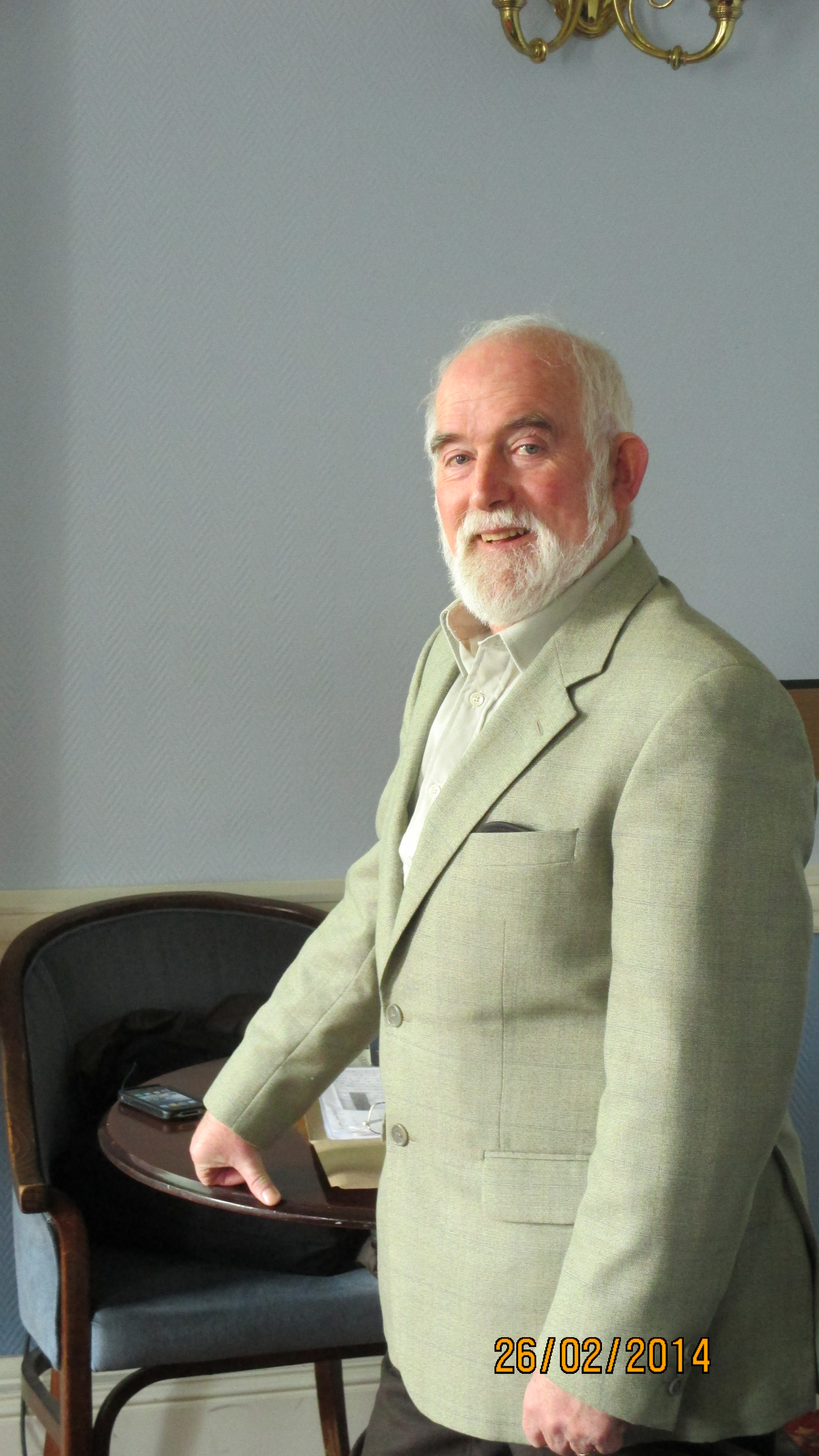
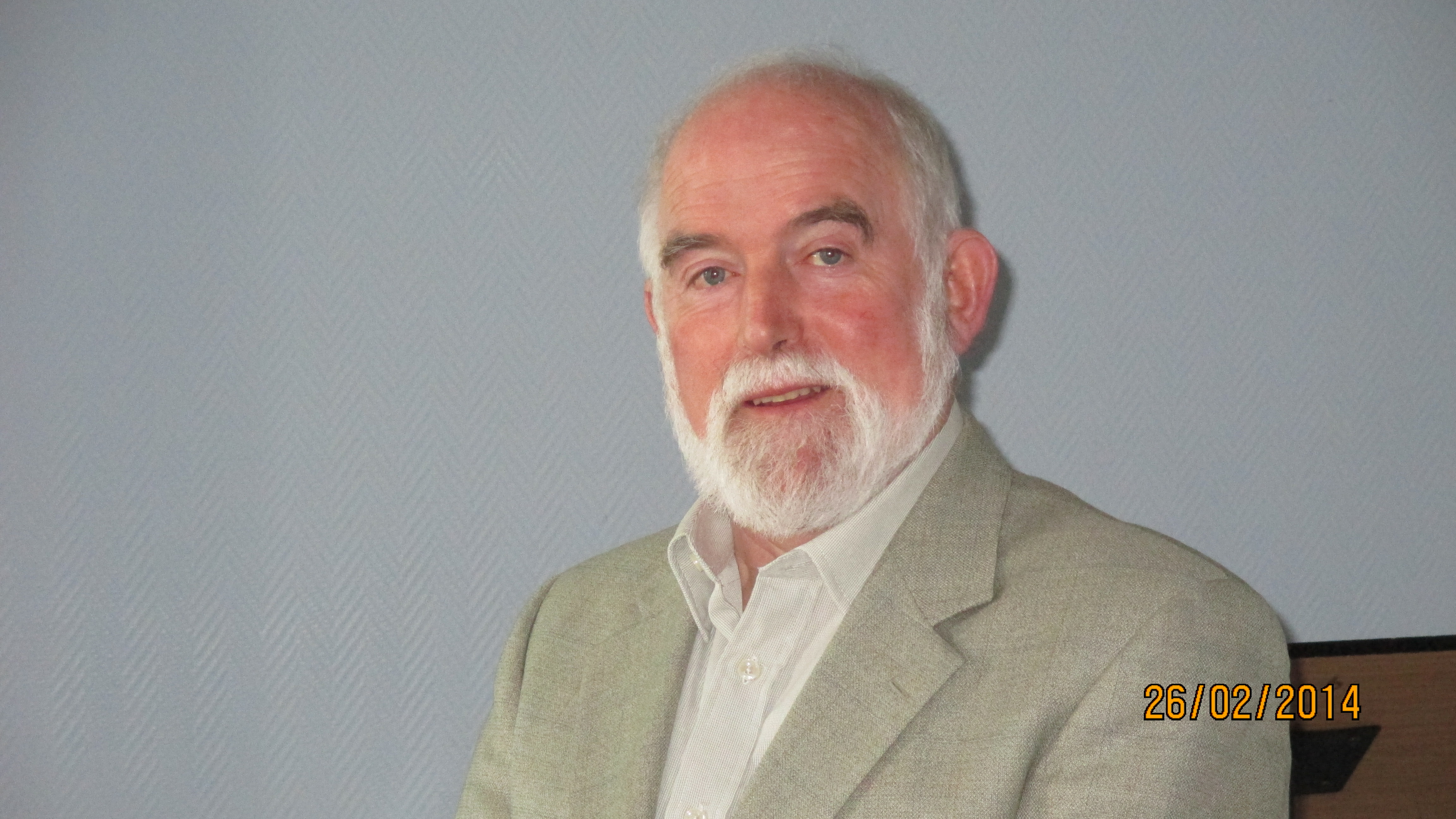
Classically trained and residing in Ireland, Colm specialises in the fields of Ragtime, Stride Piano and Musicals. Since 1990, he has played a series of 20 Solo Concerts in the National Concert Hall Dublin.  He has played extensively on the Concert stage in Canada and the United States, where he recorded his CD “Scott Joplin, Gershwin, Fats Waller & All That”. His playing of Scott Joplin Ragtime, recorded in Dublin, has received a lot of airplay on Irish TV & Radio. He is the only Irishman to be invited to play at the prestigious Scott Joplin Festival in Sedalia Missouri, where he has received 3 invitations in 90, 95 & 96. He was invited back again in June 2006.
In Ireland, he has played at many venues including regular appearances at the Cork and Derry Jazz Festivals. In 2002 he received an AIMS award as Best Musical Director for his show “Jesus Christ Superstar”. He has appeared twice on the Late Late Show with the late Professor Peter O’Brien and performed with Paddy Cole and Ronnie Drew in the National Concert Hall Dublin. His 2 Ragtime Compositions have been copyrighted & recorded in USA.
We were delighted to welcome Colm to perform at our April Miscellany in Club na Múinteoirí, Mountjoy Square.  This is the second time that Colm has presented at one of our miscellanies.  He was rapturously received by a packed house and he held us spellbound with his marvellous renditions of famous ragtime numbers and anecdotes.

Colm will appear in the NCH on Fri 27th May 2016  1-2pm
Colm “Stride” O’Brien (Piano)
Giants of Ragtime & Stride Piano
“Mr Gershwin meets Fats Waller & Scott Joplin”


Posted in Uncategorized | Leave a comment

Those boots were made for walkin’

Lovely walk in Glendalough yesterday with beautiful sunshine for the first half. Thank you Norah. The heron in Tymon Park was reluctant to let Tim and Norah’s car leave at 10.30 – he had become quite attached to it!

Here are pics of the group on the Miner’s Way and the Spink.

Posted in Uncategorized | 2 Comments

Cycle Trip

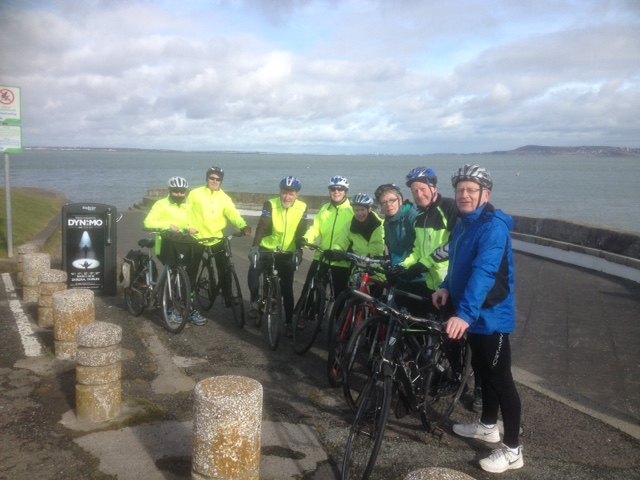
Here are some of our intrepid members on a cycle trip to Dalkey.  If you are a cyclist why don’t you join our cycling trips?  We have two trips per month and we’d love to have more members put on the gear and get with the programme!

Here we have a picture of our gallant group courtesy of Mick Griffin.

IMG_1114

Posted in Uncategorized | Leave a comment

Perfect Day for a Good Wallk

RTA walkers out in force!
A perfect day for a beautiful walk around Lough Bray Upper and Lower which was enjoyed by all 26 of us! Why don’t you join us on our next walk?  We organise two walks each month, on a Wednesday.  One is an “easy” walk, for those of us with aching bones and other maladies!  The other walk is for the “professionals” in our ranks who have the gear, the enthusiasm and the energy to go forth on a 3/4 hour hike, often over difficult or challenging terrain.  Be on the lookout for notice of walks.  Notice usually issues on the weekend before the event.
Posted in Uncategorized | 2 Comments

The Women in the Life, Love-Life and Works of Charles Dickens

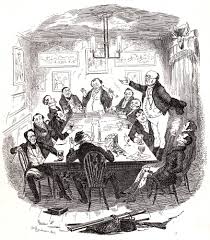
The illustration below, from the first chapter of The Pickwick Papers shows Mr Pickwick addressing the twelve other male members of the Pickwick Club.  Maleness in any of its variety of forms was a requirement to be a Pickwickian. When thirty year old Dickens first visited America in 1842 he was already a celebrity, although I believe  the term celebrity didn’t come into the English language until 1849.  He found himself on many occasions invited to dinners in his honour given by Dickensian  Societies. These were all male affairs. On occasions the ladies were allowed to listen to the goings on  in a curtained off area.  In 1867-68 Dickens revisited America. His good friends in London saw him off with a dinner in The London Freemasons’  Hall on 2nd November 1867. This dinner was  attended by about four hundred and fifty men.  A hundred ladies were allowed to watch from the gallery.

Of course it must be said that women were very much to the fore in the Dublin Dickens Fellowship. This Fellowship lasted from 1907 to 1919 and the advent of ‘The Troubles’.

Our Miscellany in The Teachers’ Club on Tuesday 23rd of February at 11:30am has a lot to say about women in the life, love-life and works of Charles. It’s a celebration of his birthday on 7th of February with a little bit of the 14th February in for good measure.

Dickens was thirty eight in 1850. He was at the top of his power as a novelist, lionised and loved.  The next twenty years, until his death in 1870, were quite dramatic and traumatic for Dickens in terms of his relationships with the women in his life- his wife, his first love, his ‘mistress’, his daughters, the second richest woman in England after Queen Victoria,  and even Queen Victoria herself.  We will also include a few of the lesser known female characters from his works as leavening and a few men for ballast. The talk will last about an hour and will be illustrated with paintings, photographs and other visuals from his works and the times. We hope to get a few laughs.

dickens

Posted in Uncategorized | Leave a comment

The Six Marys

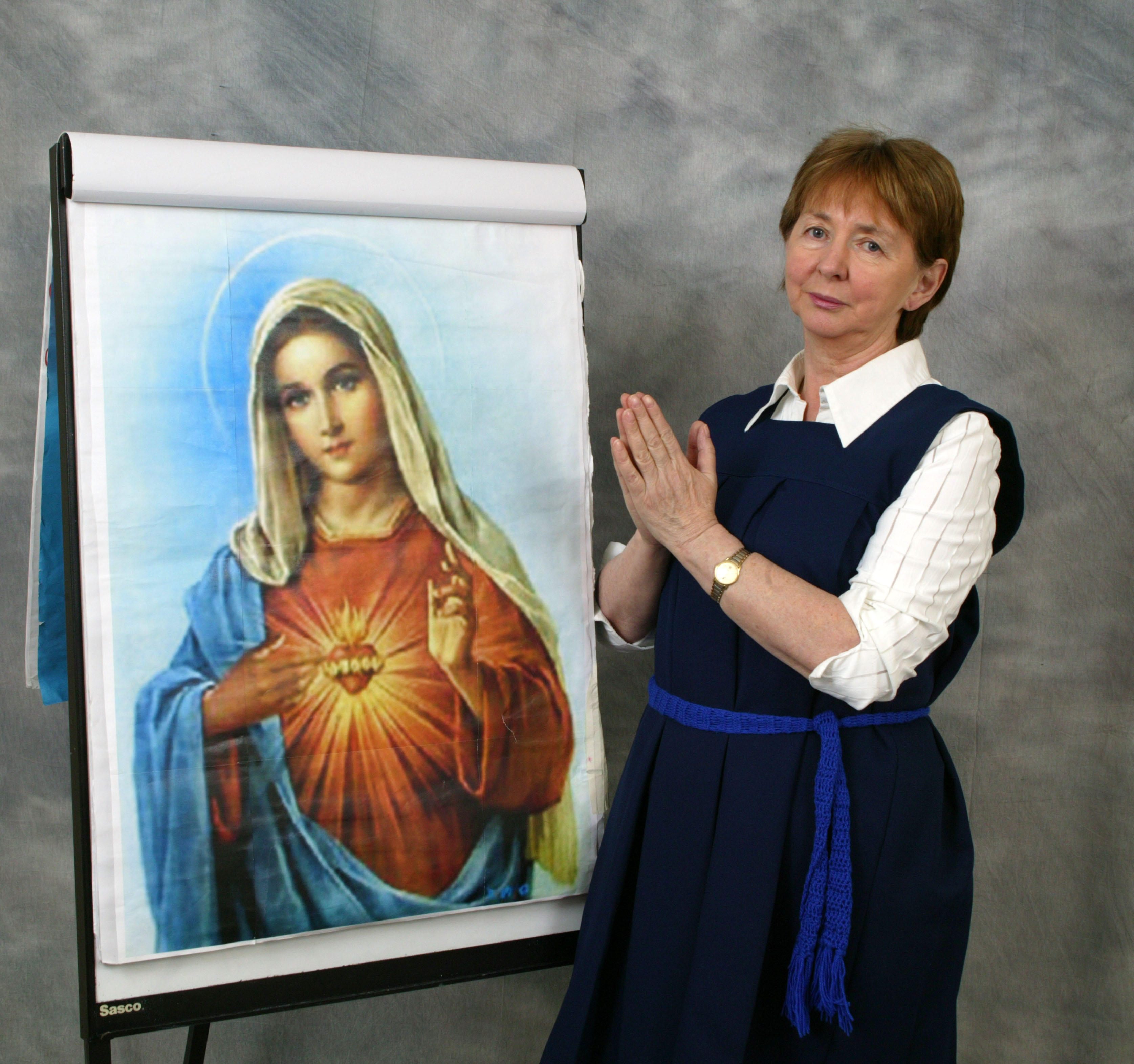
This one-woman-show is a comical yet poignant look at life, from childhood in the 1950’s, to the present day.  It draws very much on the influence of religion as taught by the nuns–preparing young Irish Catholic schoolgirls to imitate the virtues of the Virgin Mary.  They were to be meek, humble and pure.  How well did this help them cope with the huge social changes of the following decades?  Were the fanciful dreams of youth fulfilled?

This journey of self-discovery is interspersed with well-known hit songs from the various eras, sung by Catherine Gallagher.

The six Marys are fun-loving girlfriends, who grow into practical, everyday housewives.   The light-hearted atmosphere helps us concentrate on their journeys through the decades– delivering all kinds of sharp and comical observations.  Jean has plenty to say about the teenage pursuit of Mr Wonderful—followed by the reality of married life, teenage children and growing waistlines.

And, when our children grow up eventually and leave home, what lies ahead then—a big void or peace at last?

                                     Written and presented by Jean Farrell.

        Directed by Joe McCarrick

The Six Marys will be performed in Theatre@36, Teachers’ Club in Parnell Sq Dublin, on Fri 3rd and Sat 4th of Oct at 8 pm.  Booking at 087 3489609

“Really really funny—and SO true to life.”

“Haven’t laughed so much in years—LOVED it”

“I had forgotten all those things—WONDERFUL show.”

Jean Farrell  Athlone    087 2734503     jeanfarrell@live.ie

6marys

Posted in Uncategorized | Leave a comment

Funky Monkeys

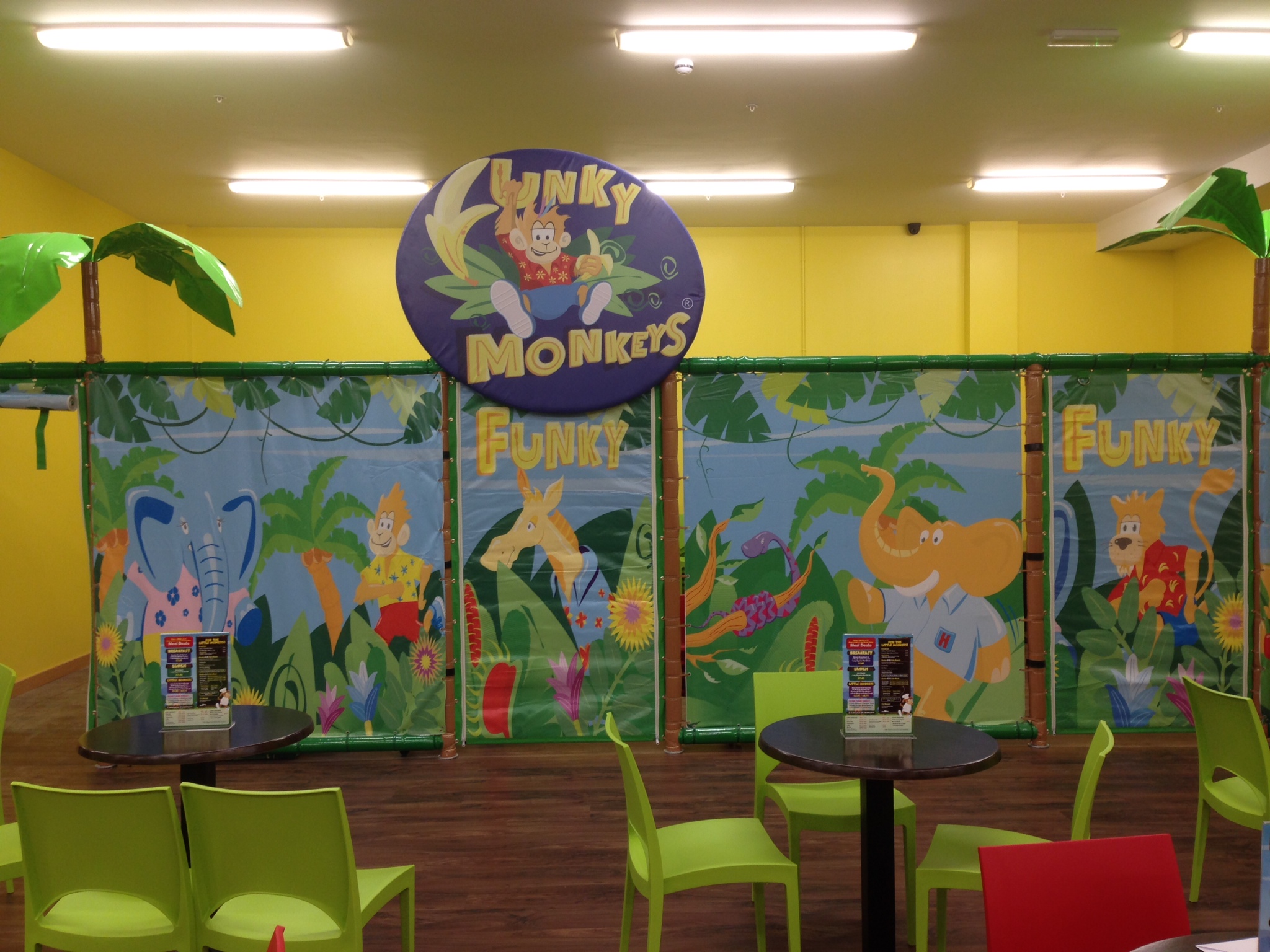
If you, like me, are a grandparent, often called on at a moment’s notice, or no notice at all, to look after one or more fractious grandchildren, in Dublin’s often inclement weather, then a new fun indoors play centre, opened recently in Dundrum Shopping Centre may be the answer to all your prayers!

While south Dublin has no shortage of parks and playgrounds, it is often the case that when it is your turn to babysit the “man above” seems to conspire against you and the heavens open destroying all your plans to get out of the house to give your grandchildren an opportunity to expend nervous energy in a safe environment.

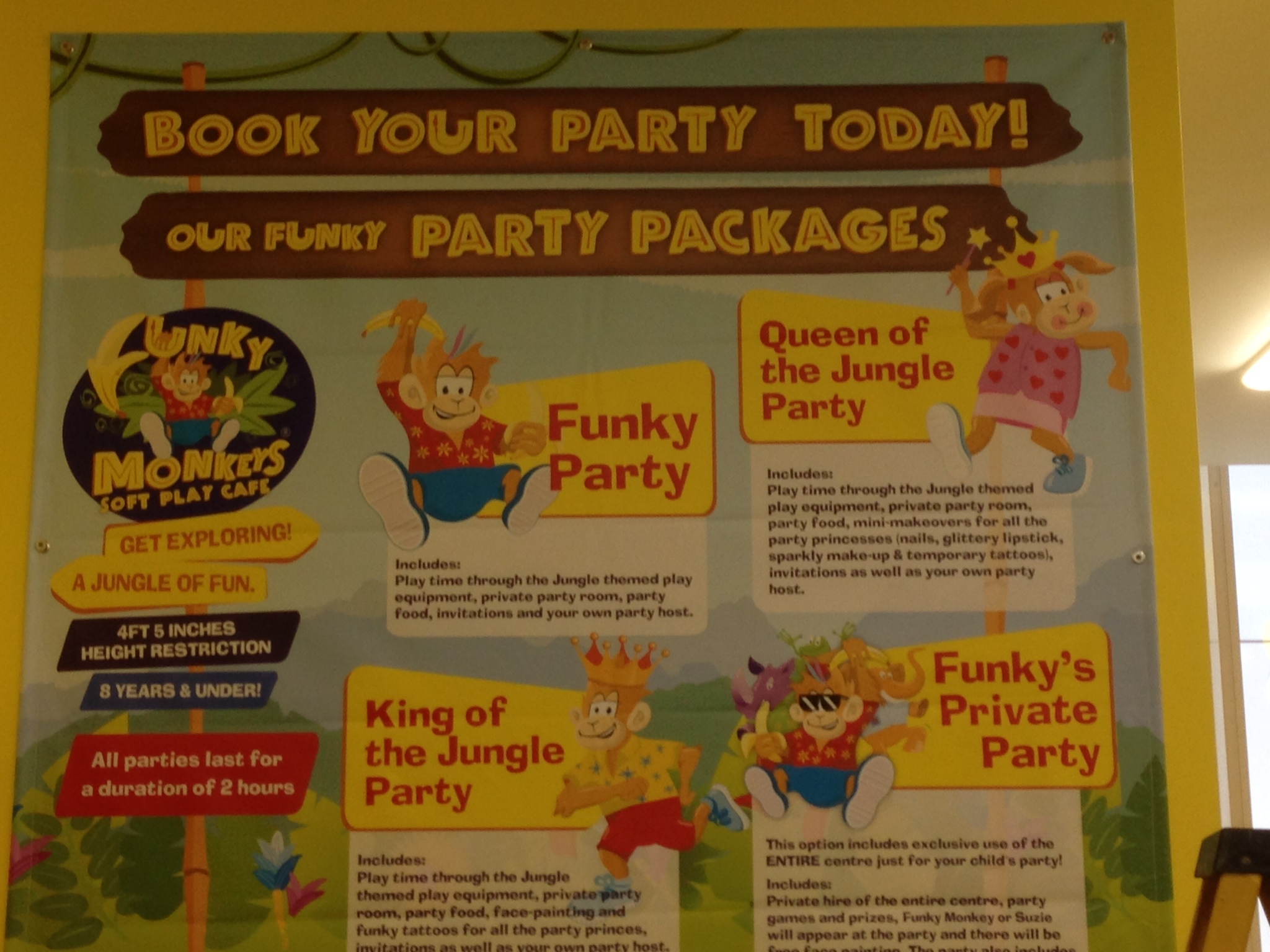
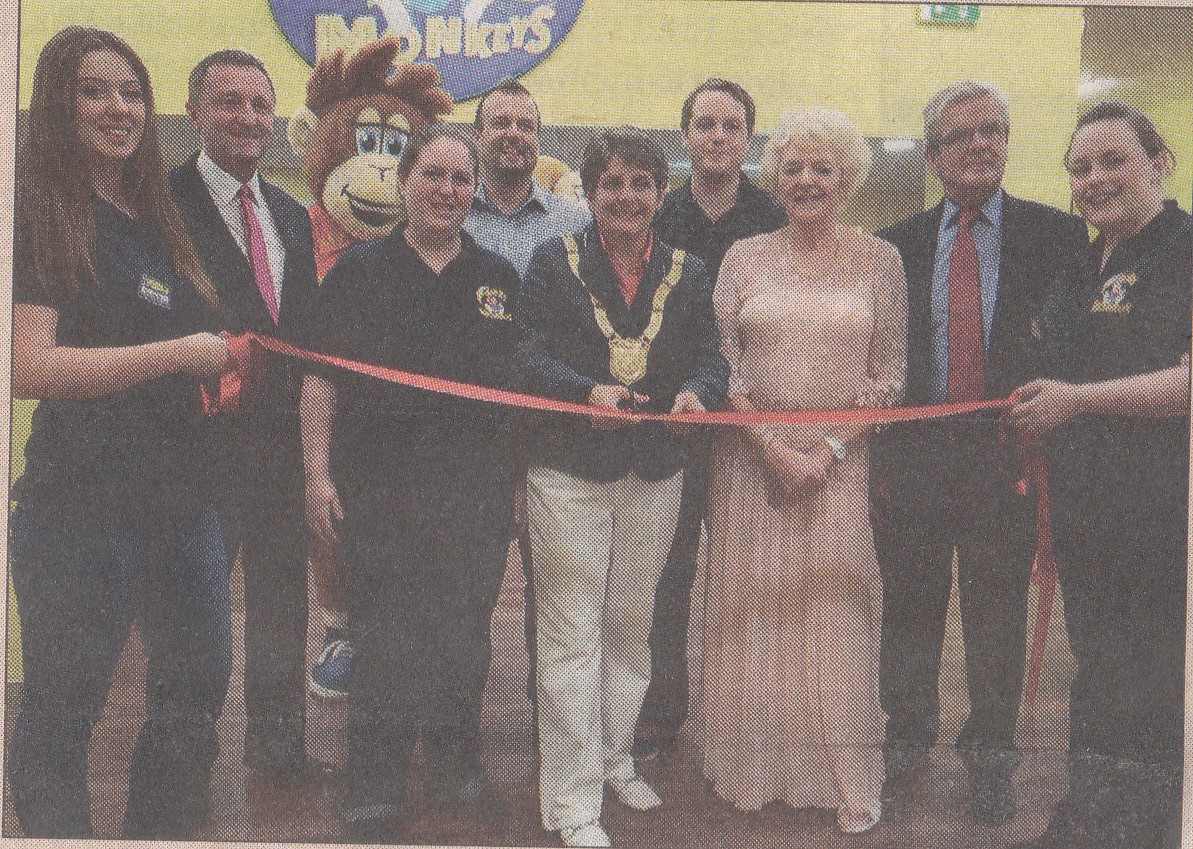
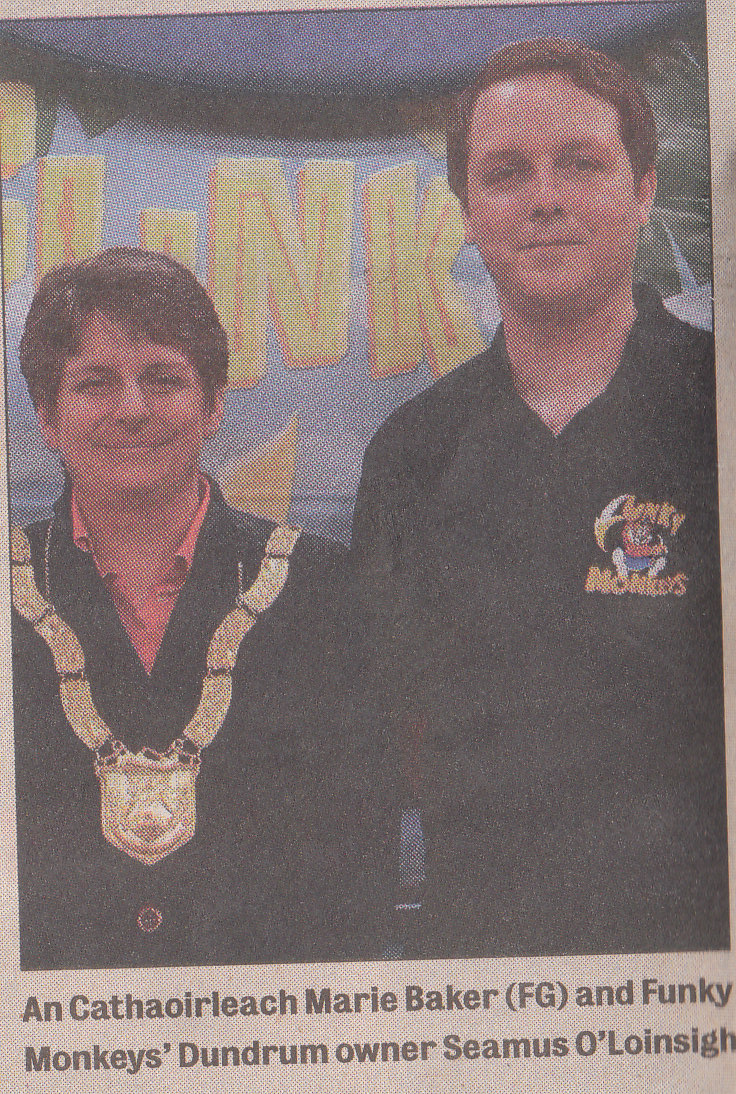
Now, if for the sake of your sanity you need to get out of the house, you can head for the Dundrum Shopping Centre where Seamus Ó Loingsigh has opened the first Funky Monkeys’ Soft Play Cafe in the Republic of Ireland.

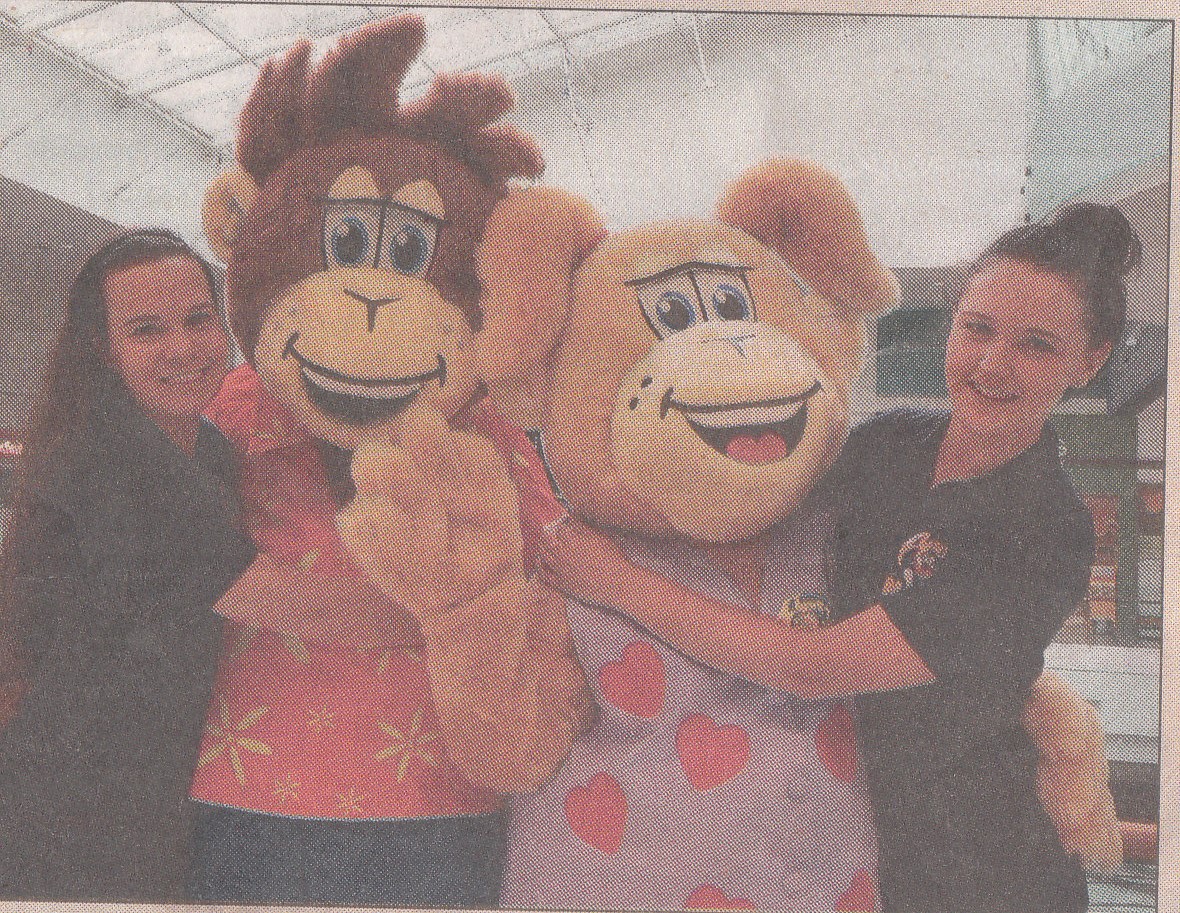
Funky Monkeys provides the ideal environment to allow children’s imaginations to run riot, to have wonderful adventures and to engage in active play.  At the same time you, the grandparent can relax, have a cup of coffee and a chat while keeping an eye on the young ones in case they become a bit over enthusiastic.

So I may see you in Dundrum sometime while we are on duty!

fm3 fm4 photo (1) photo (2)funkymonkeys_0001 funkymonkeys_0002 funkymonkeys_0003 funkymonkeys_0004

Posted in Uncategorized | Leave a comment

A Musical Tale of Three Cities Dublin, New York and Paris

‘The men that is now is only all palaver and what they can get out of you’ so says Lily, the caretakers daughter in The Dead
In this performance we will take a look at ‘Irishness’ and the Irish male, as portrayed by Joyce.

A contrast may be made with the brave women in New York and Paris who helped publish Ulysses and supported Joyce.
The miscellany  will feature songs alluded to in Dubliners, Ulysses and Finnegan’s Wake as well as ragtime and maybe jazz.
Michael and Eithne Shanley will star with Colm ‘Stride; O’ Brien on piano

This miscellany will take place on September 30th in Club na Múinteoirí beginning at 11.30 a.m.  The usual entry fee of €5 to include lunch will be levied. 

Posted in Uncategorized | Leave a comment

“Where the wandering water gushes from the hills above Glencar”

We were royally entertained on Tuesday 25th February when Martin Enright delivered a wonderful presentation about the Yeats’ countryside.  This presentation encompassed so much more than a mere sketch of the countryside around Sligo that inspired so much of the poetry of Yeats.

It was also a presentation that resonated with archaeological insights, and asides on the wonders of nature, the flora and fauna, the barnacle goose and so much more that our members were enthralled  for the duration of the lecture.  We need Martin back to impart more of his passion for his subject and perhaps also to tease us with his knowledge of music and some more poetry readings!

IMG_0001 IMG_0002

Posted in Uncategorized | 1 Comment

Arthur GRIFFITH with James Joyce and WB Yeats – Liberating Ireland

One of our members, well known author Tony Jordan, recently published a new book that should be of interest to many of our members and should find its way into your Christmas stocking!  Here is a short introduction to the book by Tony himself.  We hope to get Tony to present a miscellany in the new year and I’m sure he’d be delighted to sign copies of his book for any members who bring copies along to the miscellany!

It Is a book about the cultural and national revival through the lens of the 3 Dubliners named in the title. Griffith became acquainted with Yeats & Maud Gonne through Rooney’s Celtic Literary Society. All of them were involved in protests about the Boer War, supporting Major John MacBride and his Irish Transvaal Brigade. Together with James Connolly they sallied forth against the police as described in Joyce’s Ulysses. Yeats remained an activist nationalist until Gonne married MacBride in 1903.  While in university Joyce was anti-national despite Griffith introducing him in theUnited Irishman and defending him against censorship; “ growing turnips would be more advantageous to growing censors”.                                                                                                    Living on the continent Joyce relied on Griffith’s newspapers for news of Ireland. Joyce came to support Sinn Fein lauding Griffith for ‘doing’ something about the English domination. In articles written during those years Joyce called for an Irish revolution. He said the Irish are great talkers but we want a successful revolution for once and for all. But he added that it wouldn’t come until long after his ‘last tram’ had gone home. When it did come in 1916 he had ‘taken the King’s chilling’ out of dire necessity and remained quiet.                                                                      
Griffith supported Joyce’s long efforts [1905-1914] to have his Dubliners published. When they met in Dublin in 1912, Joyce told Griffith that he was trying to liberate the Irish politically and economically, while he Joyce was trying to free them spiritually. In 1922 when Ulysses was published Joyce felt that he had set the template for his task, while Griffith had just become President of Dail Eireann. Joyce rewarded Griffith by featuring him, alone of contemporary politicians, throughout Ulysses.                                                                                                
 Griffith did not back the 1916 Rising initially, fearing the British would lay the country waste as they had in South Africa. Griffith, who had in 1904 called for Irish parliamentarians to refuse to go to Westminster and set up their own parliament in Dublin, realised that the terms offered under the Treaty were the best that could be achieved and when full fiscal control was thrown in by Lloyd George, persuaded his colleagues to accept. The Dail and people supported this.

Griffith felt betrayed by Collins in the ‘Pact Election’  of 1922 and the bitterness demonstrated by his widow towards Collins and the Irish Free State at the treatment handed out to her and her husband, are to be read in her letters of the period contained in the book. Two of the the last five years of Griffith’s short life were spent in internment. His widow threatened to have her husband’s body exhumed and reburied in her family’s grave if the Government did not honour its promise to give the deeds of his grave to her.

Yeats made an excellent speech in the Senate in 1923 about his old colleague who had sacrificed everything for the cause of Ireland.


Posted in culture, history, pastimes, reading | Tagged , , , , | Leave a comment