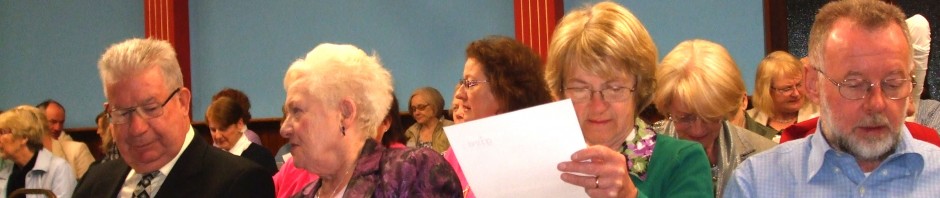
Paddy Madden has given a gardening course to members in each of the past two years. We hope to offer a course again this Spring. Here is a picture of Paddy with participants from last year’s course
![RTAI Gardening Course 2018[492]](https://dublinsouthrta.com/wp-content/uploads/2018/11/rtai-gardening-course-2018492.jpg?w=640)
Paddy Madden has given a gardening course to members in each of the past two years. We hope to offer a course again this Spring. Here is a picture of Paddy with participants from last year’s course


150 Anniversary of Major John MacBride
The 150th anniversary of the birth of John MacBride at the Quay Westport Co. Mayo occurred on 8 May 2018. He was executed on 5 May1916. John MacBride was the youngest of five brothers born to Honoria Gill from Clare Island and Patrick MacBride from Glenshesk in Co. Antrim. The family was steeped in Irish nationalism and John became a member of the Celtic Literary Society and IRB as a young man. He represented the latter at a Convention in Chicago in 1896. On his return to Ireland he travelled to South Africa and was joined shortly by his good friend Arthur Griffith. They formed an Irish Society there which commemorated the centenary of the 1798 Rising in Johannesburg. When the Anglo-Boer War broke out in 1899, MacBride organised a Volunteer Irish Transvaal Brigade which fought alongside the Boers during 1899-1900. As the war developed into a guerrilla war the Brigade was stood down and the members left got passage to America. They would have been charged with treason if they returned to Ireland. MacBride, who had, due to his activities become something of a national hero, stayed closer to Ireland and travelled to Paris where among the welcoming party was Maud Gonne. Within a few months the pair were in America on a fundraising tour for Griffith’s new United Irishman newspaper and the Boer War. They were married in Paris in February 1903. This was devastating news for WB Yeats, who had for many years been seeking to marry, his muse, Maud Gonne. This did not endear MacBride to Yeats.
The marriage had been advised against by both families and all their friends. They were told they had nothing in common except for a dedication to freeing Ireland from English rule. Maud was a wealthy independent English woman used to following her own star. Within a year the marriage was a failure and MacBride decided to risk returning home to Ireland in November 1904. Their baby boy had been born in January 1904. Maud had two babies earlier with her French lover, Lucien Millevoye. Her first baby had been a boy, Georges, who died in infancy, and whose death nearly drove Maud insane. She came to believe in reincarnation and saw her new baby boy as the reincarnation of Georges. The possibility of her estranged husband claiming custody of the baby preyed on her mind when he suggested she meet him in London with the baby. She travelled there with the baby and consulted her solicitor. She then advised John that unless he agreed to give her custody of the baby, she would institute divorce proceedings against him in Paris, accusing him of molesting her eleven year old daughter. Negotiations occurred in London without agreement. Maud returned home to Paris and began the Court case. She omitted the charge of molesting her daughter, but entered a charge of him committing adultery with her half-sister, Eileen Wilson. The case went to Court and MacBride insisted the allegation of molestation be raised and adjudicated upon. The Court did not find against him on either charge.
Maud exchanged letters with WB Yeats during this lengthy process. He was thrilled and hoped that Maud would get a divorce. Her letter of 8 August 1906 to him said “The Court thinks the charges of immorality are insufficiently proved. Grants Mrs MacBride Judicial separation and guardianship of the child…allows the father visiting rights…the father to have him one month a year when over six…I am very disappointed”.
MacBride exercised his visiting rights on a couple of occasion before returning to Ireland, never to see his son again. John MacBride reintegrated himself into the national struggle. He wrote a thirteen part account of his Transvaal Brigade for the Freeman’s Journal and became a much sought after public speaker throughout Ireland and Britain. Padraig Pearse wrote to him;
Sgoil Eanna on 17 February 1912:
A Chara,
Could you find time to address the members of St. Enda’s Branch of the Gaelic League in our Study Hall, some Friday evening in the near future? Any subject likely to appeal to the imagination of young Gaels would do; history, literature, science, travel, industry, even politics in the wider sense, would all be admissible…
Yours sincerely
PH Pearse
P.S. What the boys would really like is an account of your experiences in the South African War.
He was a confidant of John Devoy and acted as Tom Clarke’s Best Man in New York. He became Water Bailiff for Dublin Corporation, collecting dues at the port with an office at 4 Rogerson’s Quay. In 1914 he, Arthur Griffith, William O’Brien and Sean T. O’Kelly attended a meeting in Dublin with the majority of those who subsequently signed the Proclamation that decided on the necessity of a Rising.
MacBride advised Peadar Kearney that those who could leave Jacob’s Factory before the surrender in 1916 should do so, saying “Liberty is a priceless thing and any of you that see a chance, take it. I’d do it myself but my liberty days are over”. At his trial he called one witness, his landlady, Clara Allan, of Spenser’s Villas Glenageary. She was the woman he loved and who loved him. She told the Court-martial, “I have known the accused twenty five years… I have never seen him in uniform, nor has he got such a thing, as far as I know”. As they parted he said, ‘Mind the Flag’, in reference to the flag of the Irish Brigade. Clara was a Methodist and converted to Catholicism after the execution. She and her family protected his Papers etc. until eventually they were placed in the National Library and National Museum. After his trial John told Sean T. O’Kelly, “Nothing will save me, Sean. Remember this is the second time I have sinned against them”. Fr. Augustine OFM who ministered at his execution in Kilmainham reported that John died “a brave man, fearless of death”. In July 1916 Clara Allan together with Maire ni Bhrolcohain, went to Westport for a National Aid concert and stayed with Mrs MacBride on the Quay.
Anthony J. Jordan’s next book is titled Maud Gonne’s Men.


Anthony J Jordan, member of RTAI Dublin South, the biographer who has written books on figures including Winston Churchill, Éamon de Valera and Christy Brown, has donated his literary archive to the National Library of Ireland (NLI).
Mr Jordan, who is from Ballyhaunis, Co Mayo, was in Dublin yesterday for the handover.
The archive includes books on W B Yeats and an early play written by Christy Brown, the writer and painter who had cerebral palsy.
Mr Jordan said: “Some of my most exciting moments of research occurred in this library and I hope that my manuscripts, and the correspondence that has informed my work, inspires future readers and researchers.”
Mr Jordan has worked in special education for a number of decades and was the former principal of the Cerebral Palsy Ireland school in Sandymount, Dublin, where Brown was a pupil.
In 1998, he published Christy Brown’s Women: A Biography Drawing on HisLetters. A large number of Brown’s letters were acquired by Mr Jordan several years after the writer’s death in 1981.
Other items donated to the National Library were The Guiding Light, an early play by Brown, which was transcribed by his brother in three notebooks. A substantial number of letters from Brown’s family and friends are also included.
A number of documents in the archive show Mr Jordan’s correspondence with Daniel Day Lewis, the actor, during filming for My Left Foot in 1998, during which the actor regularly sought out information on Brown. Day Lewis won an Oscar for his performance.
Other documents donated to the library include material relating to Major John MacBride, on whom Mr Jordan has written extensively.
Dr Sandra Collins, director of the NLI, said they were delighted Mr Jordan had chosen to donate his archive to the library where, she said, it would be preserved and accessible for generations to come.


My sincere thanks to member Tony Jordan for this article. Tony is a prolific author and noted expert on Irish history and on Joyce in particular.
After the ‘Ulysses’ author died, in 1941, Ireland declined to honour him as it had WB Yeats.
When Frank Cremins, an Irish diplomat based in Berne, informed the department of external affairs in Dublin, where Éamon de Valera was minister, of James Joyce’s death, in Zurich, on January 13th, 1941, the department’s secretary, Joseph Walshe, responded, “Please wire details about Joyce’s death. If possible find out if he died a Catholic? Express sympathy with Mrs Joyce and explain inability to attend funeral.”
Joyce had lengthy contact with the Irish diplomats in Vichy France before receiving permission to enter neutral Switzerland; he arrived in Zurich with his family on December 17th, 1940. In Geneva he had been met by Seán Lester, the Irish diplomat who was secretary general of the League of Nations, and with whom Joyce spent a most friendly couple of hours.
On hearing of his sudden death, Lester sent a wreath and suggested that Cremins might attend the funeral, so that an Irish official would be present. The only diplomat there was, in fact, Lord Derwent, the British minister to Berne.
Joyce is buried in a beautiful little cemetery high on the Zuricherberg, but Mrs Joyce will never be happy until his body is brought back to Ireland
As usual with the Joyces there was a shortage of money, and friends had to pay for the funeral. The single grave at Fluntern Cemetery, numbered 1449, could accommodate only one coffin, and, according to Joyce’s biographer Gordon Bowker, “was meant to be temporary, until Nora” – the writer’s wife, Nora Barnacle – “could get him repatriated to Ireland, and she asked Harriet Weaver, Joyce’s patron and literary executor, to look into this. Weaver approached Count O’Kelly, the Irish chargé d’affaires in Paris, but the hostility to Joyce among the Catholic clergy, scholars and politicians was so intense that the request was refused.”
An American diplomat, scholar and bibliophile, John Jermain Slocum, whose James Joyce collection was acquired by Yale University in 1951, and whose annotated A Bibliography of James Joyce remains the standard Joyce bibliography, travelled to Europe in June 1948 “in search”, he wrote, “of material by and about Joyce. In Zurich I saw his widow and son. Joyce is buried in a beautiful little cemetery high on the Zuricherberg, but Mrs Joyce will never be happy until his body is brought back to Ireland. She is a devout Catholic and feels that his body should rest in the land of his fathers.”
James Joyce: the writer’s grave in Zurich, with a sculpture by Milton Hebald
WB Yeats and repatriation
When the body of WB Yeats was repatriated to Ireland, in September 1948, many thought that Joyce’s might follow. A variety of people began to take soundings. Among them was Slocum. Barnacle’s uncle James A Healy had been instrumental in Slocum’s meeting President Seán T O’Kelly in June. Slocum wrote a long, very carefully crafted letter to O’Kelly on November 25th, 1948, referring to Yeats’s recent repatriation and asking, “I wonder if it is unreasonable to think that James Joyce might be so honoured someday, and that in so honouring him, his country would be honouring itself. I realise that this proposal is presumptuous coming from a foreigner . . . If you were to express to me even a belief that such a return of his body to Ireland was possible, I think that I could start his friends in Zurich, in Paris, in London, in New York and even in Dublin, working on it wholeheartedly.”
Slocum referred to a possible “stumbling block – the Church which he ostensibly repudiated”, arguing that “through his Jesuit education the Church was the fount of his inspiration, the mould in which his genius was formed”. Slocum referred to the stand taken by L’Osservatore Romano, the Vatican newspaper, on Joyce’s work on October 2nd, 1937, saying that “there is sufficient evidence that the Church itself recognises his contribution to the tradition of Catholic letters. In an article on Irish literature he was described objectively and dispassionately” in these terms.
Seán MacBride: the minister declined to associate himself with exhibitions about James Joyce’s life in Paris
Slocum wrote to Constantine Curran, a lifelong friend of Joyce, on March 11th, 1949: “I wrote a long and impassioned letter to Seán T O’Kelly several months ago proving conclusively that Joyce was a good Catholic and that his body should be brought home to Ireland because his widow would have it that way and because he was a large stone in the tower of Irish literature, or rather world literature. I have had no answer . . . If you should see him tell him to get after his secretary. I am waiting on an answer.”
Joyce had ridiculed Seán MacBride’s parents, Maud Gonne and Maj John MacBride, during their divorce, four decades earlier, nicknaming them Joan of Arc and Pius X
Slocum’s letter to O’Kelly was dealt with by Valentin Iremonger, private secretary to Seán MacBride, de Valera’s successor as minister for external affairs. He spent several months challenging Slocum’s reading of L’Osservatore Romano. He got the Irish ambassador to Italy, Michael MacWhite, to locate the article and interview its author. He wrote to Patrick Lynch, private secretary to Taoiseach John A Costello, that the article could hardly be construed as “evidence that the Church itself recognises Joyce’s contribution to the tradition of Catholic letters”. Slocum never got a reply to his letter, and a note made at the Department of the Taoiseach on July 15th, 1949, recorded that no action was to be taken.
MacBride had a close familial relationship with Yeats but had reason to be hostile to Joyce, who had ridiculed the minister’s parents, Maud Gonne and Maj John MacBride, during their divorce, four decades earlier, nicknaming them Joan of Arc and Pius X. When material from Joyce’s wartime flat in Paris was shown in the French and British capitals, MacBride declined to associate himself with the exhibitions.
James Joyce: the writer’s wife, Nora Barnacle, and their children, Giorgio and Lucia. Photograph: Marka/UIG via Getty
Finnegans Wake
Harriet Weaver had intended to give the manuscript of Finnegans Wake to the National Library of Ireland. Barnacle opposed this, however, annoyed by recent reaction to her husband. MacBride wrote to her on July 12th, 1950: “I should like you to know that I personally and I am sure my colleagues in the Irish Government, as well as the Library itself, are deeply sensitive of how desirable it is from the nation’s point of view that the manuscript of this great work should be deposited in your husband’s native city. We are proud that James Joyce, one of the greatest Europeans of his time, was also a son of Ireland and we feel that the presence in the Library of the manuscript of [what] may be his greatest work would be a fitting commemoration of that fact.”
The manuscript went, at Barnacle’s decision, to the British Museum. She died on April 10th, 1951, and because of the size of her husband’s grave had to be buried apart from him at Fluntern Cemetery. Later a new grave was opened, and it is where James, Nora, their son, Giorgio, and his wife are now buried.
Anthony J Jordan’s latest work is James Joyce Unplugged.
Coverage in The Irish Times
The issue of James Joyce’s repatriation seems to make little appearance in The Irish Times during the 1940s, though the letters pages did flare up following an Irishman’s Diary on Saturday, October 22nd, 1949, which concerned a Joyce exhibition at La Hune Gallery, Paris, that year.
A friend of the writer had visited the exhibition, attended by “quite a little gathering of the Dublin clans.” The article said Sean MacBride, then minster for external affairs, was quoted in a French newspaper as being a “great admirer of Ulysses”.
The piece prompted a response from Maria Jolas, a close friend of the Joyces and co-founder of the literary journal transition. She was surprised to see MacBride’s approval quoted in the article.
“However great an admirer of Ulysses Mr MacBride may be, there would appear to be an unwritten law which forbids official expression of this admiration,” she wrote in a Letter to the Editor, published on November 22nd. Mr MacBride, she explained, had recently declined an offer to open the exhibition.
Mrs Jolas also recalled how a letter in 1948, written by the president of the James Joyce Society in New York to president Sean T O’Kelly regarding Joyce’s repatriation, had apparently “gone astray in the press of official correspondence”.
Visitors to the exhibition were probably unaware that to some of his countrymen, Joyce was “still in exile, still banned,” said Mrs Jolas. “The simple question that, as a personal friend of Joyce, I should like to ask, is: Why, and for how long?”


The Christmas Miscellany took place in Club na Múinteoirí on Tuesday, 5th December, under the genial stewardship of Carmel Uí Loingsigh. Carmel welcomed everyone, with a special warm welcome to new members, recently retired.
Carmel had a special warm welcome for our two musical “directors”, Joe Johnston and Joan Harding. Joan accompanied the singing on the piano.
We were very pleased this year to welcome John Boyle, President INTO to the miscellany. John briefly addressed the gathering and assured members that he is working tirelessly to ensure that pensions are fully restored and that pension parity remains a priority of his presidency and that of the INTO.
The proceedings began with a rendition of a few favourite Christmas carols, the singing being ably led by Joe Johnston. This was followed by a medley of items performed by Mick and Eithne Shanley. Especially poignant was their rendition of the “Fairy Tale of New York”
Carmel Dempsey then performed 3 parodies that were performed with panache and caused great hilarity and added to the humorous mood of the occasion.
Sean O Connor reads a poem as Gaeilge and John O’Carroll sang Coinneal an Leanbh Íosa. They were followed by Fintan Walsh who gave us a virtuoso performance of Once in Royal David’s City and South of the Border, although he didn’t mention whether this was pre or post Brexit!
Joan Morrissey then performed a couple of parodies that had her audience spellbound. Of course, no Christmas Miscellany would be complete without Joe Johnston’s Recorder Group performing a number of carols, which they did with polish and elan.
Noel Ferriter then regaled us with a knowledgeable talk on the background to the Wexford Carol followed by a rendition of the carol itself.
Carmel concluded the session by thanking the staff of the Club and Tadhg Mac Pháidín for their help and co-operation in organising the event, the performers and a tribute to Matt Reville, who recently retired as Branch Secretary.


This review was taken from last Saturday’s Irish Times, Oct 14 and it reviews a book by our own Tony Jordan.
This book about James Joyce is an interesting amalgam of excerpts from Joyce’s works, letters by, to or about him, and anecdotes and recollections by acquaintances, as well as a very basic biography. A considerable portion is devoted to Joyce’s relationship with Arthur Griffith, founder of Sinn Féin, for whose newspaper Joyce contributed a number of articles. Naturally, Joyce’s much commented-on relationship with his wife, Nora, is further commented on.
his writing proves that ‘it was a mistake to establish a separate university for the aborigines of the island’
The author, a biographer of a number of Irish figures, has some interesting insights about Joyce as well as some debatable opinions, especially his argument that Joyce was really an Irish republican. He includes this reviewer’s favourite comment about Joyce, from the provost of Trinity College Dublin, that his writing proves that “it was a mistake to establish a separate university for the aborigines of the island”. This entertaining book may well encourage wavering would-be readers to finally tackle Ulysses.


The Teacher’s Club saw a multitude of talent on June 16th, Bloomsday. Mick and Eithne Shanley, together with a talented crew of singers gave a spellbound audience a virtuoso performance of Joyce’s works from the Dubliners through to Ulysses and Finnegan’s Wake.
The show included readings from Joyce to songs drawn from Joyce’s works and a lively performance by Colm “Stride” O’Brien on piano. The musicians included Jimmy Kelly,
Pat Good, Aisling Connolly, Dick Tobin, Joseph O’Dwyer and of course Mick and Eithne Shanley.
This was truly a great night’s entertainment. Club na Múinteoirí is to be commended for providing the hall for the evening’s performance.
The Government and public sector unions reached agreement early on the morning of June 8 on a proposed extension to the Lansdowne Road Agreement (LRA).
The proposals in the main, deal with the pay and pension conditions of serving public service workers.
However, the proposals confirm that for the duration of the agreement, retired public service workers will receive pension increases in line with pay increases received by their peers currently in employment.
The proposed Agreement is for a 3 year period Jan 2018 to Dec 2020. If agreement is reached the question of ‘pension parity’ is confirmed for the duration.
The cohort of public servants who retired in the past 5 years (since 1 March 2012) will be the first to gain. This group retired on a reduced salary scale. As this scale is set to increase during the lifetime of the agreement, those whose pensions are linked to this scale will also see their pensions increase.
Public servants who retired prior to 1 March 2012, the bulk of RTAI members, have their pensions linked to the pre-paycut scale. As this scale is at present higher than the current teachers’ scale, parity does not immediately arise for this cohort. However, as the teachers’ pay scale increases the pensions of the post 1 March 2012 retirees will become aligned with the pensions of those who retired prior to 1 March 2012. At that point pension parity becomes an issue for every retiree, irrespective of date of retirement.
Please note that the full detail of the agreement is not yet to hand and further details will be posted over the next number of days.
The RTAI has been campaigning for the preservation of pension parity for many years and views this latest development as very significant and welcome.
At the time of writing, INTO has urged its members to reject the proposals. However, as Impact and SIPTU are proposing acceptance, it is apparent that the deal will be accepted.
The other aspect worthy of note in the proposals is that full restoration of pension cuts has been kicked down the road to 2020!
Those of us who have survived the blackboard jungle and made it to retirement are now surviving on a reduced pension, thanks to the beneficence of our political masters and the FEMPI creature spawned by the twisted logic that spurns the Apple billions while greedily milking hard pressed pensioners of their hard earned pension through the mechanism of PSPR!
No wonder many of us find it hard to draw breath! This is why many members, your humble author being one, who have taken to pilates to build stamina. Our tutor, Claire McGlynn, puts us through our paces rigorously, while at the same time having due regard to our age and in some cases, our general lack of fitness!
A recent article in the Irish Times says the latest research shows that taking exercise in short bursts could be just what the doctor ordered. It’s known as high-intensity interval training (Hiit) and it is now part of any fitness instructor’s offering. Even those who can’t be bothered to go to a gym or who don’t have the time can benefit.
High-intensity training means really pushing yourself for a short amount of time, resting, then pushing yourself again. What’s shocking is how little time it can take to make a difference to your fitness.
Claire Mc Glynn, a competitive weightlifter and personal trainer at cmgfit.com in Dublin, and trainer to Dublin South RTAI, loves to use Hiit and says it is the best and quickest way to achieve positive results in your physical and mental health. “It’s very simple really – everyone knows that when you put 100 per cent of effort into something, you get the best results and there is no exception when it comes to exercise.”
Claire has been doing pilates with our members now for two years. “Their progress has been unbelievable. Many started with me two years ago and now they are blitzing sessions of many, many squats, lunges, push-ups, plank holds for up to three minutes and so on. Their mobility, strength, fitness, self-belief and confidence has increased tenfold.”
Claire holds classes in St Judes Parish Centre in Templeogue on Mondays and Thursdays. Currently both classes are full but vacancies may occur in the future and even if you’re not attending class, you can still work out in the privacy of your own home!

 Dublin South RTA